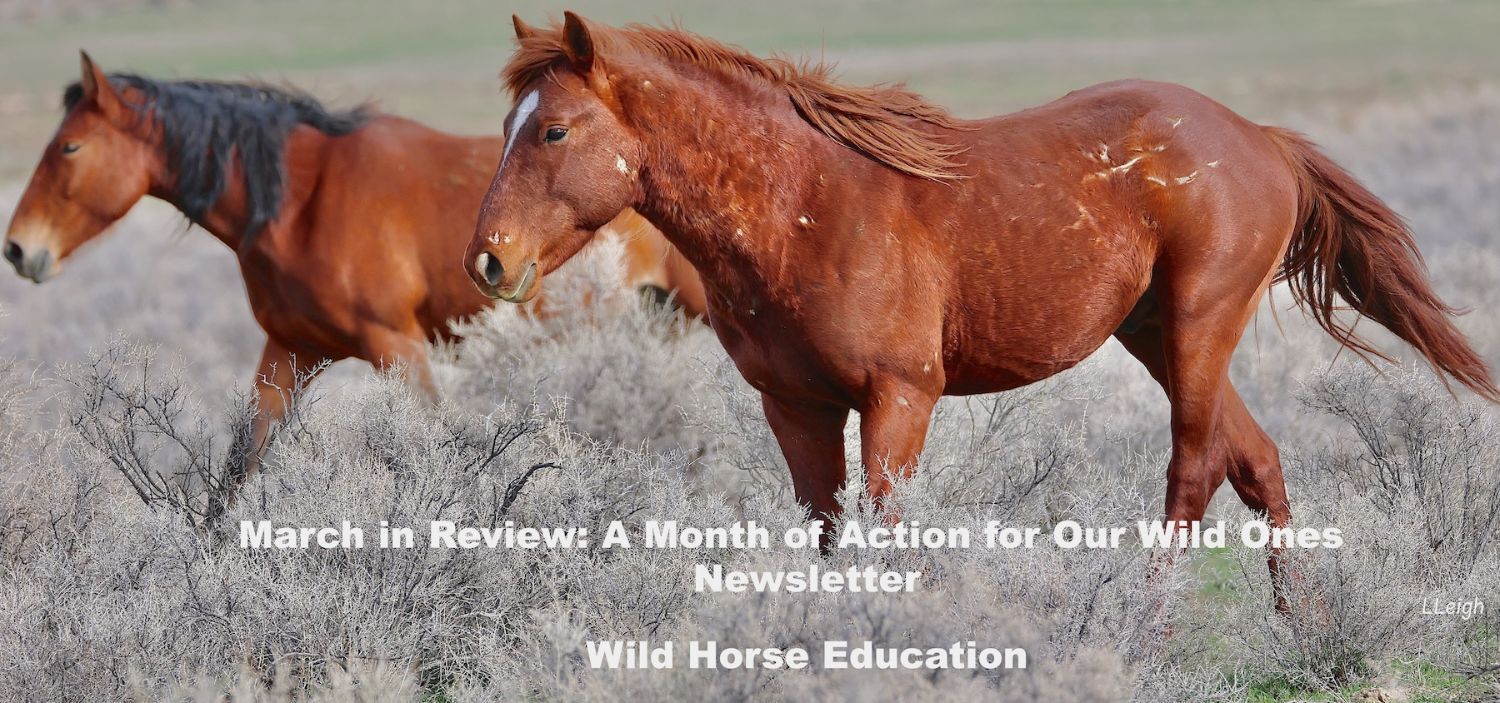
 | March has been a month of action—for advocacy and for Wild Horse Education. From working on cases in five western states to standing in dusty holding pens and threatened herd areas, our team is pushing back on agencies that still refuse to lawfully and humanely manage our wild horses and burros. We’ve poured our energy into litigation, outreach to lawmakers, and new reports that our volunteers are already using—and that are published for you to use as well. Many of the articles below include specific public action items—please take them. When you add your name, make a call, or send a letter, you amplify the legal work happening behind the scenes. | | | | Start with the SAFE Act The slaughter pipeline is still open, and both domestic and once-wild equines remain at risk of being shipped over the border to die for human consumption. The SAFE Act would permanently ban horse, donkey, and mule slaughter in the U.S. and shut down the export pipeline—closing a loophole that continues to threaten titled wild horses and burros. A WHE volunteer has issued a powerful plea to pick up the phone and call Congress now, before another session passes without action. Not Burger Meat – Please Make the Call Heber, AZ: Last chance to sign before Monday Heber Wild Horse Territory is facing a dangerous mix of unpermitted corrals, questionable trap-like structures, and ongoing gunshot killings of wild horses while agencies remain largely silent. Our attorneys are sending our next letter to the U.S. Forest Service on Monday, demanding answers, CAWS-compliant facilities, and a public process that respects both the law and the lives lost. This is your last chance to add your name before it goes out. Please sign and share:
Heber WHT, AZ – Corrals, CAWS, and Silence from Leadership Appropriations, 2027 Budget negotiations are just getting underway, with members of Congress sending their funding “wish lists” to key committees while we still have not seen the President’s formal budget request for this program. This early stage is when dangerous language can slip in—or be stopped—so it is critical that advocates speak up now, before numbers harden and deals are cut behind closed doors. For context and talking points you can use when you contact your lawmakers, see our latest overview:
Budget 2027 – Another Mess and How to Deal With It A broken holding system Our team continues to track the horses taken in the recent helicopter roundup at Antelope, following them into Palomino Valley Center. From weanlings with “hay belly” after being weaned too young and too fast, to disease outbreaks like strangles, these conditions show a program that fails horses after the helicopters leave. We are calling for enforceable, national welfare rules—not voluntary “guidelines” that are ignored when inconvenient. Visit this article to send your letter and demand change:
Weaned Too Early – Facility Update | | 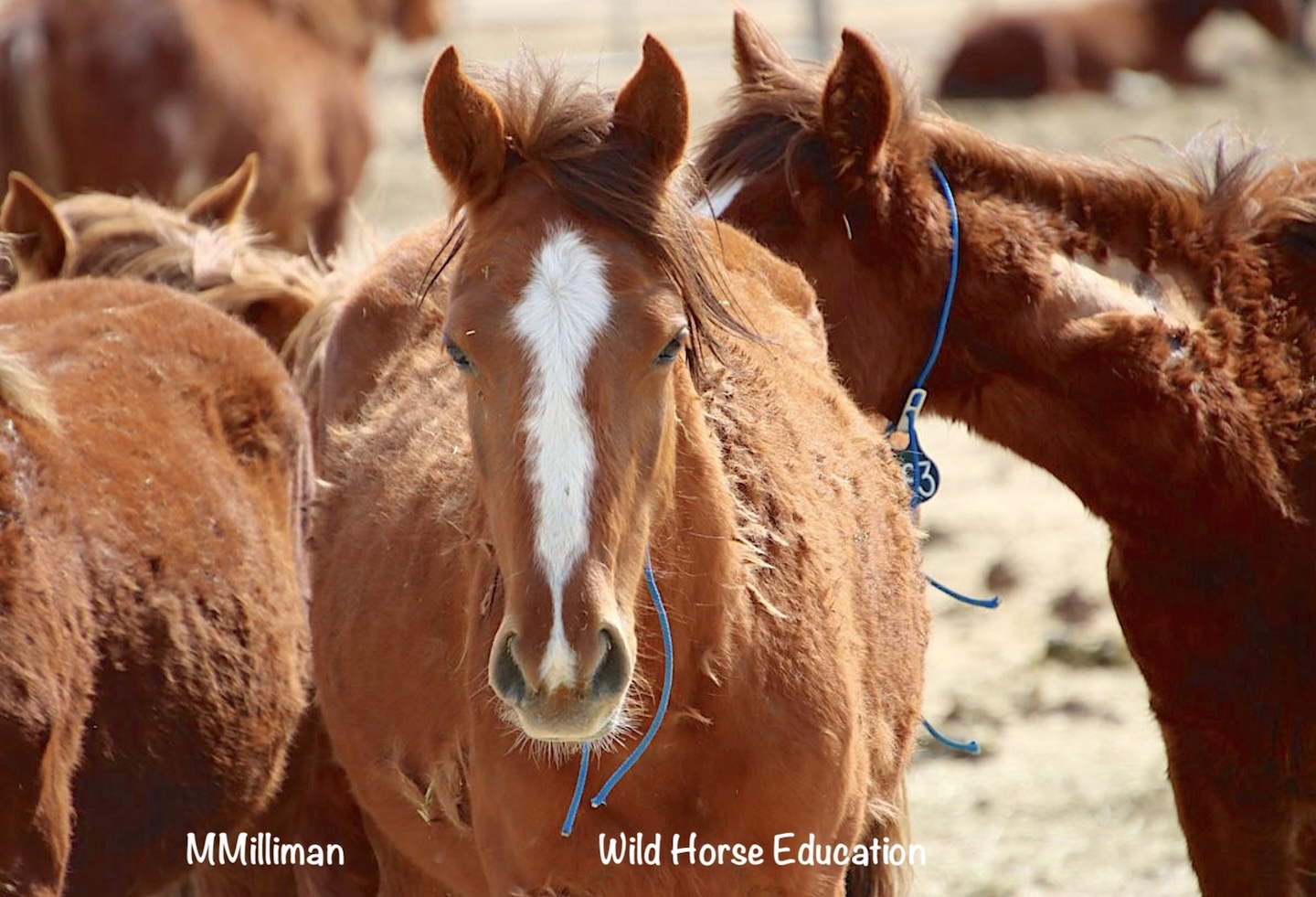 | Reports and Guides In March, our team created tools for your advocacy. “Cooked books” and the 2026 BLM population report BLM’s new 2026 Population Statistics Report looks like neutral data, but it is being used as a political tool—inflating a sense of “crisis,” claiming tens of thousands of “excess” horses, and driving funding into roundups and holding instead of real management. Outdated counts, zero-AML areas, and numbers untethered from modern science all feed a narrative that wild horses are the problem, while livestock and industrial uses continue to be subsidized on the same lands. Our breakdown gives advocates and lawmakers the facts they need to push back. Please read it, share it, and use it when you contact your representatives about the budget:
BLM’s 2026 Population Statistics Report – A Political Tool, Not a Science Document Foaling Seasons & Our New Foal Age Guide We’ve added a practical foal age guide to help advocates, media, and policymakers. This piece walks through how to recognize age-appropriate development, and why roundups during foaling season, early weaning, and rough handling are so dangerous. Foaling Season Is Not a Side Issue (data-based metrics are needed) Litigation Stone Cabin in the Ninth Circuit and more This year, WHE is engaged in an unprecedented level of litigation against BLM’s wild horse decisions and against habitat loss to mining and livestock across the West. From Carter/Buckhorn and Coppersmith in California to Arizona burros,and so many herds in-between, we are challenging gather plans, faulty environmental reviews, and the agency’s refusal to follow its own management documents. Our Stone Cabin case is now before the Ninth Circuit Court of Appeals, asking a basic but critical question: can BLM ignore binding Herd Management Area Plans while continuing to hit long-established herds with large-scale removal? The answer will shape the future for wild horses far beyond one HMA. We need an entire newsletter just to walk you through this expanding litigation front—and we will do that soon. For now, please read and share this update:
Ninth Circuit Appeal – Stone Cabin/Saulsbury | | 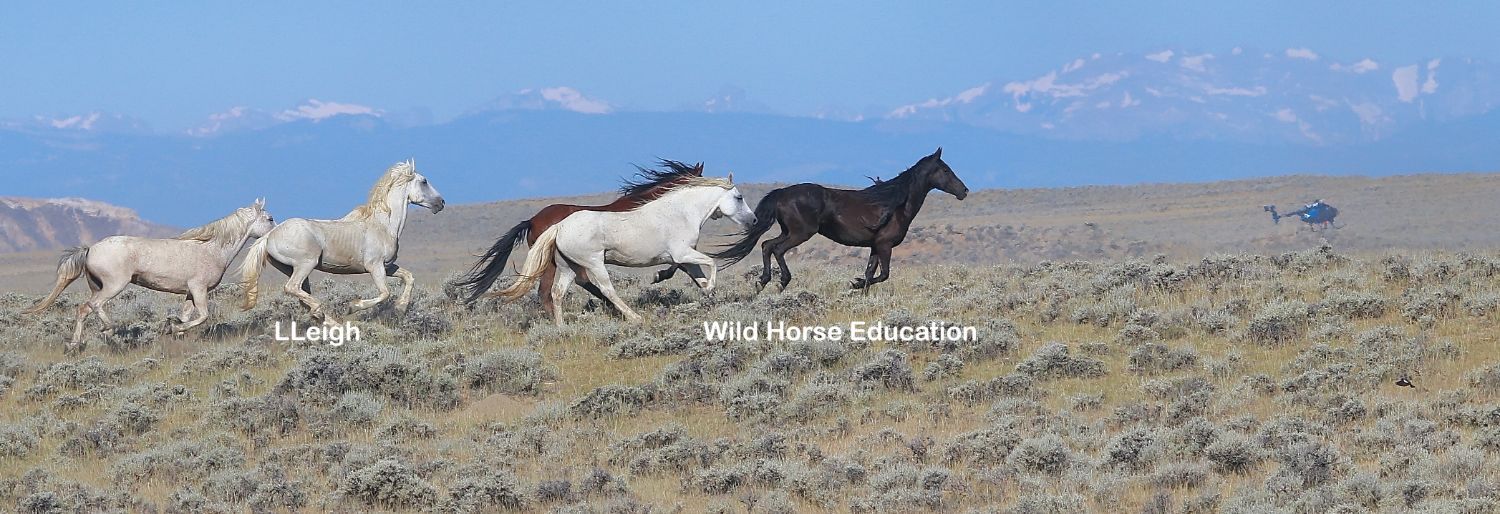 | Roundups “Closed door” bait traps BLM launched four separate bait-trap roundups in Nevada this month, largely out of public view, relying on “closed door” operations that limit what observers can see and report. These quiet removals still carry serious consequences for the herds and for the public’s right to know, and our team is working to track what happens before, during, and after the traps are set. See more:
Bait Traps & Closed Doors – BLM Launches Four Nevada Roundups in March Roundup schedule: gearing up for a hard season BLM’s 2026 roundup schedule is already being framed as a necessary response to “overpopulation,” using the same problematic numbers from the population report to justify removing thousands more horses and burros. Multiple operations will be running at the same time in different states, which means the pressure on field observers, documenters, and advocates will be intense. Our team is working now to ensure we have trained observers on the ground, cameras ready, and daily coverage available so you can see what happens—not just read the press releases when operations end.
Learn more: The Roundup Schedule – A Hard Look Why your support matters Wild Horse Education has no corporate sponsors, no government grants, and no industry lobby standing behind us. Every day in the field, every deep dive into BLM data, and an unprecedented launch of lawsuits to protect our wild ones is only made possible by people who refuse to look away—you. Thank you for standing with us during this March of action. Onward for our wild ones. | | | | Defending wild horses and burros through boots-on-the-ground, law, and action. | | | | | | | | | | | | Wild Horse Education is a registered 501c3 with the Internal Revenue Service. Contributions are tax deductible according to the laws of the IRS. 450-2507000 | | Wild Horse Education
216 Lemmon Valley Dr #316
Reno, NV
89506 | | | |


